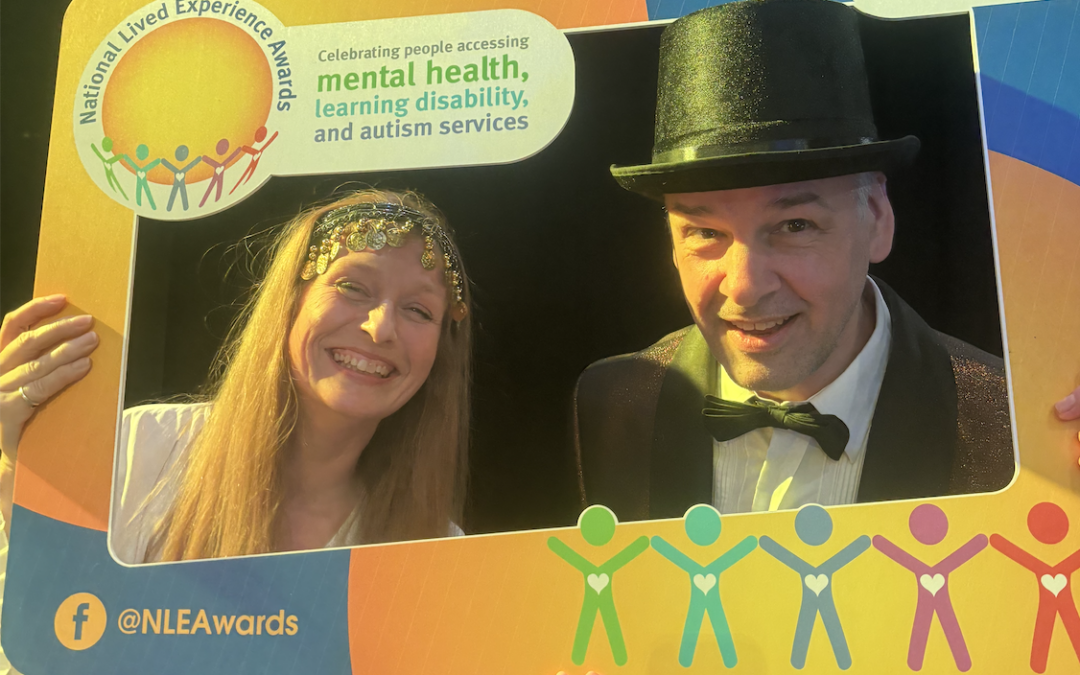
It has been an amazingly busy week for the SocialOptic team, but the highlight was the National Lived Experience Awards, which was hosted by Cygnet at Statfold Country Park in Tamworth on Wednesday.
Lived Experience, simply put, is the knowledge someone gains from going through something first-hand. A person who has spent time on an inpatient ward knows things about that ward that a policy document would never be able to convey. So does the parent navigating autism services with their child, and so does the nurse who has run the ward for a decade. When these combine, amazing change can happen.
The connection with engineering and management science might not be immediately obvious, but there is one. Toyota has a principle its engineers call genchi genbutsu, “go and see for yourself”: the people who run a process understand it best, so improvement should start where the work happens. Lived experience makes the same case, from another direction. The people who use a service understand its effect best, so improvement starts together with them. These might look like opposite claims, but they are different sides of the same coin, and that is Co-production, where they meet.
NHS England defines co-production as an equal partnership where people with lived and learnt experience work together. The staff bring the learnt knowledge of how a service is delivered; the people who use it bring the lived knowledge of how it is experienced. Put both in the room, with the power to act, and you get what every entry in this year’s awards demonstrated: Powerful change.
Knowledge sits in circles. At the centre is the person using the service. Around them are the carers and families who see what the person can’t always voice. Around them are the staff who deliver the service day after day. And around all of that is the service itself, which has to learn from every one of these layers to improve. Patient experience work, carer surveys and staff surveys are some of the many ways that knowledge travels between the circles, so that what one layer knows doesn’t stay trapped there. Knowledge is inherently social, and it has to be shared in order to exist and to effect change.
It has been said, in a number of different ways: Often the people best placed to solve a problem are those closest to it. Most organisations accept this in principle. Acting on it is harder, because people with lived experience need authority and support for their insight can create change. They aren’t closest to the problem, they are closest to the opportunity. The entries this year showed what Lived Experience can achieve. People who have used services worked alongside those who deliver them, and together they created better environments and better outcomes for those who come after them. The awards themselves were wonderfully co-produced. The day was moving. Performances ran throughout, and reminded everyone that creativity belongs in this work. A song or a poem lets someone share what otherwise might be locked away.
Congratulations to all of the winners. The judges were keen to recognise everyone who took part, and we want to echo that. The finalists, and everyone who submitted an entry, have made a difference up and down the country. The combined impact is breathtaking in its scale.
Making sure voices are heard sits at the centre of how SocialOptic works. Understanding supports empathy, and empathy creates better shared outcomes was a point made in many different ways over the course of the day, and it is how we deliver WorkTogether.
One of our favourite moments came with the Mark Britton Service User Choice Award. The award remembers Mark, who played a key part in these awards and championing the voice of service users. The winner is chosen by a live vote of everyone in the room. It was presented by Mark’s mother, Maggie Britton, and this year it went to Akin, from Cygnet Bury Hudson. You can hear more of Akin’s story here.
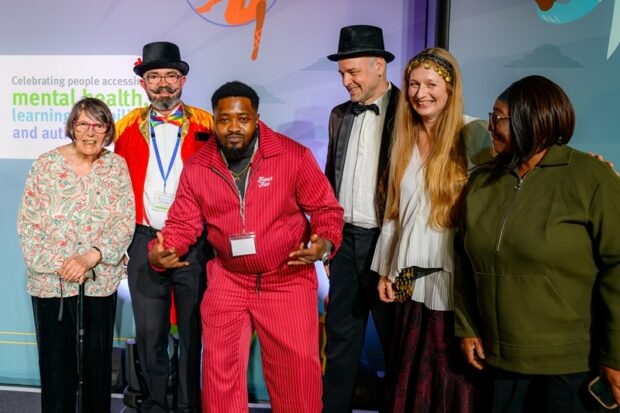
Thank you to the Cygnet team for putting on such an incredible event, and to Raf for being an amazing ringmaster. It was great to catch up with so many people, and a particular shout-out goes to Zach from LENS.
If you want to know more about what lived experience means and how our services connect to it, you can read our lived experience page.