Archive for the ‘Management’ Category

Fons Trompenaar on Innovation at Orange Live

Thursday, June 17th, 2010

Sometimes it takes a night’s sleep to digest a talk. Fons Trompenaars session yesterday here at Orange Live 10 was one such talk. It provoked a huge deal of discussion and argument in the Blogger’s room afterwards, and with a title like “riding the whirlwind, creating a culture of innovation,” it’s probably not hard to see why, especially as he packed 5 book’s worth of thinking into one session.

IMG_1966 by you.

“We’ve developed bi-polar thinking” Fons declared, before running through a series of examples of the polar opposites and apparent contradictions that businesses find themselves challenged by daily (interjected by a steady stream of jokes at the expense of MBAs of course). The most obvious dilemma is the age old “centralising versus decentralising.”

We’re riding the wave of decentralisation right now, supporting increasingly distributed organisations, but Fons pointed out that the only reason for a business to centralise is that it was decentralised in the first place, otherwise there would be nothing to centralise. If you follow. Is the body centralised or distributed? “yes” said Fons, with the finesse of a seasoned business consultant, or as a scientist might put it “I think you’ll find it’s a bit more complicated than that.

Now, from my perspective, I think ‘distance’ is being steadily eroded by technology – many of the traditional reasons for centralising are being mitigated by presence, social computing, mobile technology and increasingly high bandwidth. I think distributed will be with us for quite a while to come.

Fon’s thesis is that innovation is the art of combining these contradictory ideas (like central versus distributed) that are apparently contradictory and turning them into concrete and measurable actions, to realise tangible business benefits. That’s quite a challenge, but this integration of opposites has a process to it:

  • Recognize – increase awareness.
  • Respect – appreciate the cultural differences.
  • Reconcile – resolve those cultural differences.

The concept is built on a model of culture – a dynamic process of solving human problems and dilemmas – and the assumption that as humans we are loaded with values that are “half killed by our culture”. What we do and what we want to do are rarely the same. Fons made liberal use of cultural stereo types to illustrate that we live in a world that is more culturally diverse than we realise. Increasing international travel and population mobility has made us more aware of those differences. The themes across the bulk of innovation literature, which Fons outlined,  are these: Inclusion, Diversity and Leadership – and a particular type of leadership at that.

“Successful leaders have the competence to help organizations and their teams reconcile dilemmas for better sustainable business performances.”

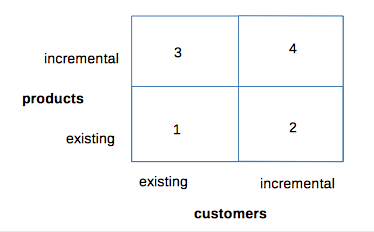
One lens through which to view an organisation is a classic 2×2 grid, with the axises being:

  • Hierarchical versus egalitarian.
  • Person-orientated versus task-orientated.

Its a model we’re already familiar with, but what was interesting to me is that these four quadrants lead to four distinct styles of employee motivation:

  • MBS – management by subjection – the boss is the boss.
  • MBO – management by objective – things to do are the things that matter.
  • MBJD – management by job description – the role defines the individual.
  • MBP – management by passion – the vision drives the action.

Businesses don’t live out their whole lives in one quadrant, the transitions between the quadrants are the crises that define distinct phases of a business. They key is to understand what sort of business you are in, and tool up appropriately. Finally, back to that culture of innovation, how do you build it?

  • Start with the creative individual.
  • Build the inventive team.
  • Create the innovative organisation.

There. Simple. It’s always the implementation that’s the challenge isn’t it? Fons gave us a word for it – “xnovation” – partnering with people outside of your industry, and learning from business models outside of your industry. Reminds me of the Medici effect. More learning happening here on the Orange Business Live Blog

Creative Leadership

Wednesday, May 19th, 2010

Outcome-based planning seems to attract a different type of leader. I had the opportunity to catch up with a few of our biggest Milestone Planner advocates on the phone today. I always come away from those discussions energised – they are a very different crew to the majority of executives I rubbed shoulders with in the past. There were always a minority who were different, but I didn’t understand clearly why.

The Harvard Business Review blog has a post on “How To Ignite Creative Leadership In Your Organization” which draws on the IBM 2010 Global CEO Study. The report talks about the rapid escalation of complexity, and CEO’s doubts about their ability to manage it. It’s a time of rapid change for businesses, with global integration causing the world to operate in different ways. From volcanoes to volatile markets, business leaders are constantly being confronted by blind spots.

That doesn’t bother the kind of outcome-based, collaborative leaders we get to interact with. They aren’t phased. The Harvard post puts it like this:

Creativity in this context is about creative leadership — i.e., the ability to shed long-held beliefs and come up with original and at times radical concepts and execution. And this requires bold, breakthrough thinking. We believe, however, that this isn’t about having a lone creative leader at the top but rather about creating a “field” of creative leadership, by igniting the collective creativity of the organization from the bottom up.

We put it like this: Plan across the social networks that exist within your business. Let information and change propagate through them in real-time. Set milestones, aim for them, adapt them, adjust them, put everyone in charge. A “field” of leadership, rather than a point of leadership. In our world, people propagate the key information between plans and projects. People, with the right social tools, do a much better job of getting the right information to the right place, and innovating with it, than any of today’s computing power possibly can.

Creativity isn’t the enemy of good planning, it is its absolute best friend. Back to that Harvard post:

Creative leaders in these firms are more prepared and willing to make deeper business model changes to realize their strategies. To win, they take more calculated risks and keep innovating in how they lead and communicate. They are ready to upset the status quo even if it is successful and are committed to ongoing experimentation with disruptive business solutions.

Frank Kern: Senior Vice President, IBM Global Business Services talks about the background to their report: “We’re entering a pivot point…”

The 2010 CEO Study is here. Of course this isn’t new news. Dr Anne Marie McEwan of The Smart Work Company has been shaping our thoughts on what we can learn from the past for quite some time (Smart Working: Learn From The Past). What makes for good leaders hasn’t changed. What is different is that technology is moving from being a barrier to good leadership to being an enabler. Here’s to creative (and collaborative) leadership.

Managing Client Expectations

Wednesday, May 19th, 2010

I caught site of a post about managing client expectations. Lots of us have projects to implement which involve not only folks from within our organisation, but clients, suppliers, contractors from other organisations. Sometimes managing the to-ing and fro-ing of who’s doing what where and when, and what the expectations around these goals are, can become confusing, tied up in email threads and telephone conversations that not everyone is involved with or remembers.

There Must Be a Better Plan?

Enter Milestone Planner. Here it is easy to set up a project space that all of the different collaborators can be involved in, regardless of whether they are inside or outside of your organisation. When one person needs to know where folks are at with a particular aspect of the project, they simply check the history of that milestone to be brought up to date – no need to trawl through emails or arrange an unnecessary meeting.

Working Independently Together

Each person can update the individual aspects of the project autonomously, without needing to worry about whether they have informed the right people – anyone who needs to know will be able to see at a glance.  Effective communication is key to the smooth running of a project, but as Craig Buckler warns:

“Be careful not to bombard them with multiple calls and never make assumptions about their decisions.”

Milestone Planner can provide the forum to strike the balance between effective communication and overdoing the phone calls and meetings.

“The client is unlikely to be concerned by your PC crashes, hard disk failures, or child-care issues — but they will care about schedule slippages. Be honest, explain the situation, the risks, and what you are doing to solve the problem.”

There are no surprises in a Milestone Planner project. As soon as something slips, it is transparent to everyone on the project, and the history of each milestone allows everyone to keep track of why things have changed.

Transparency is key to managing expectations.

10 Questions for Project Success

Monday, January 18th, 2010

I read these 10 questions on the Priority Attitudes blog. The post is from an article written by Richard Maybury’s colleague, Paul Stacey and is worth clicking through to read. I’ve met Richard and some of his clients, so I know that he gets results. Paul and Richard point out that a firm foundation for a project is critical to its success. Get it wrong, and cracks will appear down the line.

Of the many projects I have seen over the years, I often seen a pattern of over thinking the details, while under thinking the purpose of the projects. The former creates rails for things to go off, while the latter means that people are unclear of what to do when things go off track, as they do inevitably.

Focussing on outcomes, the steps to get to them, and the constraints around them, actually creates more flexibility than focussing on activities and who will do them.

Here are those ten questions:

  1. What’s wrong with the current situation?
  2. How will things be different when we’ve finished?
  3. What are the performance criteria?
  4. What’s the scope of the assignment?
  5. What are the cost constraints?
  6. What are the time constraints?
  7. What project specific constraints exist?
  8. Who is the project sponsor?
  9. Who is the project manager?
  10. What authority is being delegated?

Lots of people have asked us to add multiple owners for milestones and workstreams in Milestone Planner. We hear you. We are working on a way to do this, but one which keeps points 8,9 and 10 clear. Clear ownership means clear accountability and less risk of “hot potatoes”. Clear responsibilities and ownership are key to ensuring that projects progress along. The feedback we are getting is that Milestone Planner really does help to keep things on-track, and provide clarity for everyone involved.

I’ll leave you with a last quote from Richard’s post:

Of course, laying a firm foundation is only the first step to creating the project deliverable and many potential pitfalls remain for the unwary project manager. But without clear answers to these ten questions it is highly likely that the project will encounter significant problems later.


Advanced Cat Herding – Part I

Monday, December 21st, 2009

Benjamin Ellis by SylwiaPresley (cc)

Last week I shared some thoughts at MediaCamp London #3, which seem good to offer up here. Coffee in hand, I talked through the things I’ve discovered about the management of knowledge-driven and creative businesses over this past decade. I can’t say that they are complete thoughts, but in the way of a blogger, I’ll share them here for you for agree/disagree/clarify/extend. The slides I used are on slideshare already:

I use the phrase “cat herding” because it is about the best I have to describe managing very bright, creative people. For the avoidance for doubt, the term isn’t meant to be derogatory, it’s simply one I’ve come to use for the skills involved in leading highly-autonomous, bright folk – The kind of people you don’t realise the potential of by providing a to-do list. There were three sections to the talk: Being a great cat herder, being a great herd member and being a great cat. I’ll cover the first in this post.

Being a great cat herder

Whenever I ask people what makes a good manager, and what makes a bad one, a standard set of themes emerge. For the good manager, it is around emotional intelligence – “being understood/understanding”, “supportive/encouraging”, “being fair”. For the bad it is around process: “not explaining things”, “being absent/being overly present – a micromanager” and so on. Good managers are people rather than process oriented. They get the process things done, but they don’t let them dominate. Perhaps they are better referred to as leaders? I’m increasingly convinced that you manage things, but lead people. They are different skills.

Knowledge workers and creatives generally don’t like being told what to do or how to do it. And rightly so. If you hire people for their skills and knowledge, then you aren’t going to go far if you don’t use them. In a knowledge-business, the boss is no longer the smartest person in the room for every (or any?) given question.

Realise the Potential

One of the biggest failings of managers – or perhaps one of the differences between a manager and a leader – rests in realising the potential of their team. If you’ve hired bright people, you don’t need to tell them what to do, you need to explain why you want them to do it, and then provide them with what they need to be successful. The ‘what’ that needs doing may be different than you at first thought, and in today’s real-time business world it might change while it is being done too. The ‘why’ rarely shifts, and if it does, generally the need for the project goes away with it.

Give your team a clear purpose. Explain what is happening, provide the background, and an explanation of not just what is happening, but why it is happening. The key to an outstanding business is unlocking the discretionary effort of its staff, and that means giving people the motivation to go the extra mile and do their best, rather than “what will do”. Enable people to give their all, and throw their full selves into the business. To borrow from Maslow, that means meeting their needs, from the physiological, through providing stability and certainty, to providing a sense belonging in the business and an appreciation of what they bring to it.

Traditional business management looks at people, processes and systems – although mostly processes and systems. Today’s business environment has simultaneously commoditised processes and systems, so that there is no competitive differentiation in them, and become so fast moving as to render most of them useless before they can be implemented.

Differentiation in today’s market place rests in having great people, and building an environment that lets them operate at their highest level. In my early working life, in retail, the businesses were driven by process, but all of the businesses I have worked in over the last few decades have been driven by skills and knowledge. It’s a big shift in the way that a business is built, and in the kind of systems that are required.

Be More Than Slightly Better

The scales that balance Innovation and Execution have also shifted, tipping relentlessly towards innovation. Being competitive means constantly disrupting your business to create better products and services, and more closely meet the needs of those all-important customers. Small incremental improvements in process are no longer enough to keep up with the competition, and differentiation comes from the philosophy of the business as much as from strategy – witness Toyota’s recent retrenchment back to its core philosophy. Philosophy drives strategy, and strategy drives execution, and the latter two are subject to a rapidly changing market place.

It shouldn’t be a surprise that Milestone Planner resonates with much of this thinking. It enables emergent planning, balancing clear ownership with shared responsibility for what happens, and the ability to change tactics in real-time. In recent years I have become convinced that social media, or rather social technology, IS the new process, or at least that it is the scaffolding around which the necessary process can be built. Putting people in the middle of everything, and connecting them with the relevant information, propagated via their social graph, is the core of a knowledge-intensive business. Connecting all of this with the mission of the company, and a clear vision of where it is headed, creates an unstoppable force that drives great execution, and that is the responsibility of every good cat herder.

Next, part 2: Being a good member of the herd.