Archive for the ‘Event’ Category

23 Ways to Mess Up (Business) Relationships

Wednesday, May 26th, 2010


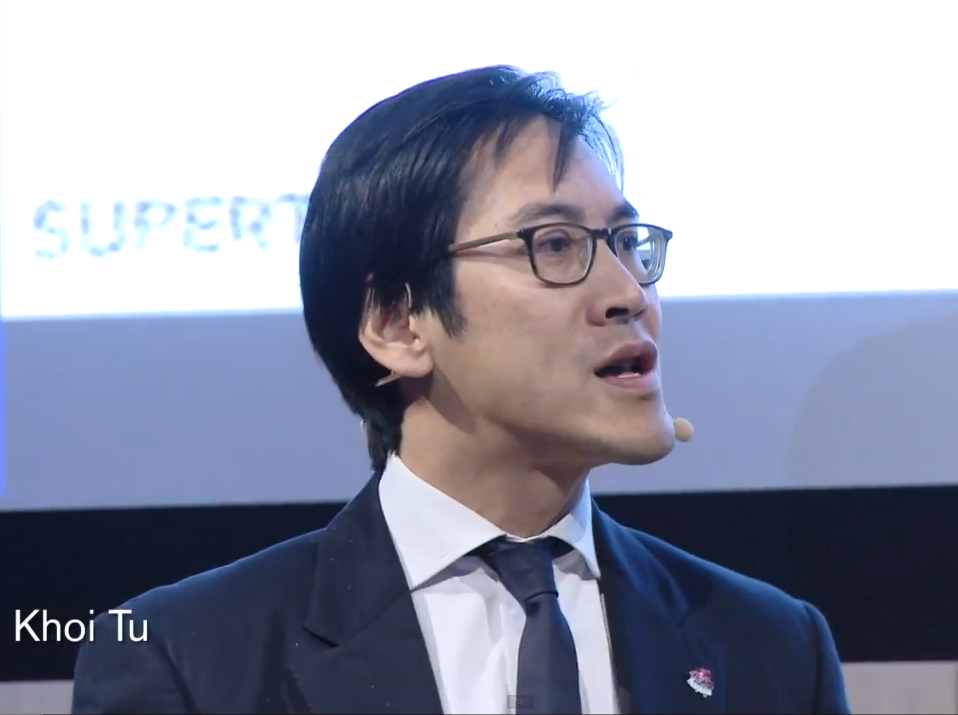
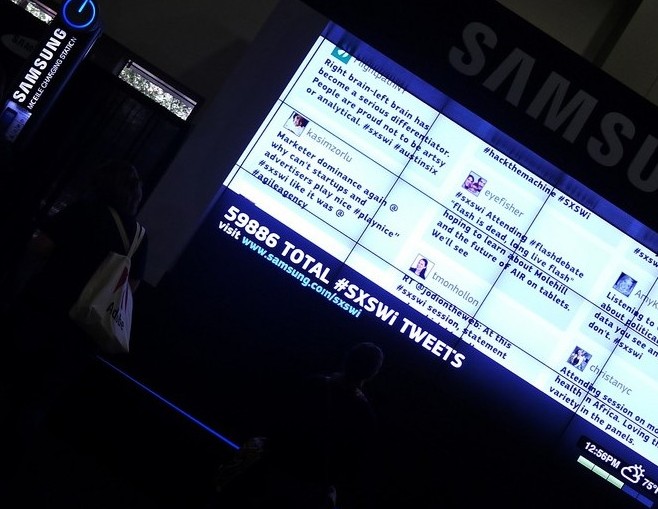
Today I am up at Thinking Digital, in Gateshead. The evidence that the digirati are here in force is that the conference tag – #TDC10 – was trending topic on Twitter. Jonathan Drori has just given a provocative talk on the on classic pitfalls of business relationships, and how to make them, or : “23 ways to mess up the relationship with your commissioner”.

For “commissioner” in his talk, you could substitute “customer”, “boss”, “investory” or many other business parties! The ‘not’ view is a great what of pointing out what you SHOULD do, starting with NOT doing these things:

  • As a small organisation:
  • 23. Go all the way on the first date – ask for money on the first meeting.
  • 22. Only call at the top levels of the organisation.
  • 21. Cloak your pitches in buzzwords, jargon and boss-speak.
  • 20. Don’t support the commissioner’s aims (the buyer). And don’t supply evidence.
  • 19. Don’t ask for anything specific…
  • 18. Be sure to include minute detail.
  • 17. Confuse useful challenge with being lippy – ideally via the press.
  • 16. Never give contacts tools to persuade others.
  • As a large organisation:
  • 15. Design pilots to test the easy things.
  • 14. Develop a handy one-size-fits-all procurement process.
  • 13. Stubbornly misinterpret European procurement law.
  • 12. A tender should come as a nice surprise.
  • 11. Frequently introduce surprising new rules – and make them tricky to understand.
  • 10. Keep ‘em keen – make people jump through as many hoops to make it hard to do business with you. Make sure that preconditions are hard to find, that dresscode is changed on presentation day.
  • 9. Call distant meetings at short notice.
  • 8. Government lawyers always know best.
  • And both ways:
  • 7. Specify first, then get technologists in.
  • 6. Choose bad measures.
  • 5a. Confuse project-management with editorial vision.
  • 5b. Never do a storyboard together.
  • 4. Confuse a neat idea with strategy.
  • In communication:
  • 3.Reinforce prejudices – it’s reassuring.
  • 2. Misjudge the knowledge of your audience.
  • 1.Avoid understanding who your audience is and how they work.

And, of course, I’d add another, never use a tool like Milestone Planner to co-ordinate and track your commitments ;) .

The ‘negative’ frame is a great way to surface the mistakes that we so easily make. Clearly, having a well communicated, common plan is essential to success, but beyond that, is it also important to avoid building in too much process and too little communication. It’s striking how many of Jonathan’s points come down to communication.

From Business to Business to Person to Person

Monday, March 1st, 2010

On Friday I had the privilege of speaking on a panel at Like Minds 2010 “Person to Person”, an event looking at the impact of Social Media, all the way from the media through to employee communication. We’ve enjoyed the onversations with organisers and founders Scott Gould and Drew Ellis, on the concepts behind person-to-person. The agenda included speakers drawn from across the world: Jonathan Akwue , John Bell (who leads Ogilvy’s 360′ Digital Influence team), Joanne Jacobs, Olivier Blanchard, Yann Gourvennec (of Orange Business serverices) and the inimitable Chris Brogan. In between taking notes and photographs, I caught a couple of clips of video that hopefully give a picture of the day:

It was a far cry from the ‘fluffy’ end of Social Media, instead the conversation was grounded and practical. It was fantastically well run, with a format that mixed presentations with panels, lunch-time discussions and theopportunity for one to one discussion. It even managed to highlight a number of local charities in the format. A huge amount came out of the day, but for this post I’ll focus on the things that most directly impact what we are doing here at SocialOptic. Much of the press coverage around social media has been on the consumer space, so it was refreshing to have a lunch hosted by Madlen Nicolaus of Kodak that focussed on social media in the field of Business to Business. With people like Stuart Baines of Futurity MediaYann Gourvennec and Adam Tinworth around the table, ideas flowed. Three key bullet points for me were:

  • Think about your use case. Are you looking for new uses for an existing product, or new customers? They require different strategies.
  • Social media can be used to augment market research, but what people ask for and what they will buy are very different. The need for product management skills has increased, not decreased.
  • Is your business the right focus for building a customer community? Sometimes it is better to support an existing topical community and be part of that. Any one product is just a small part of a business person’s life.

Something that, for me, there isn’t enough discussion about is using Social Media inside of the business, and as part of the business processes for internal and external communication. I might have a slight bias (given that we see Milestone Planner as social software – Like Minds folks can try the pro version for a month on us), I think it provides one of the biggest returns for business. Olivier Blanchard’s keynote: ‘Integrating People-to-People’ did an excellent job of providing an integrated look at a potential operational framework for social media, which Olivier has blogged about here. I joined Oliver for a panel, moderated by Andrew Gerrard, with Steve Bridger, myself and Gabrielle Laine-Peters. It was interesting that, while we all have wildly different perspectives, our thoughts and conclusions were broadly the same. The key notes for me were:

  • The age of Social Media means thinking differently about who you hire. On the one hand, as I often repeat, we are all in PR now, and on the other, collaboration trumps management in an innovative business.
  • Social Media isn’t just about marketing, it is about all forms of communication, from customer service to facilities management. Tactical use of the technology can miss the major benefits.
  • Leaders need to give staff ‘permission to act’. Demanding that employees use social media, while punishing them for doing so, is never going to have a constructive outcome.

There is a long way to go in understanding how the use of social media is changing employees expectations around communication, and a huge depth of opportunities for the use of the technology. Like Minds provided a great framework to think about both of these and some steps forwards. I am sure it will be driving many of the milestone updates in our plans, and posts on our internal blog for a good while to come! Thank you to Scott and Drew, the attendees, those that watched on line and to the speakers and panellists.

Anti-Social Business

Thursday, February 11th, 2010

Are businesses anti-social? And if they are, why are they?

That was the topic for my talk at Social Media in Enterprise (#SMiE) at Cass Business School – with much thanks to David Terrar and Alan Patrick for putting on a great event.

Recently someone said to me “Two types of people look at you funny.” – those two types of people being undertakers and psychologists. The sad thing is that most businesses would rather see an undertaker than a psychologist, even though the heart of all of their business problems is people-related. Worse still, when businesses look to deploy social media or any other form of collaborative technology, they tend to tackle the technical-feature decisions, rather than the social-people ones. If you approach social media without the psychology, you just end up with the media – you may as well just pay your staff to watch TV. And, sadly, that’s what many businesses do with their communications – they broadcast information out, and don’t build in the vital return paths that provide the business intelligence that is needed to excel.

Is your business social? Or is it anti-social?

A distinction has to be made between process-centric and knowledge-centric businesses. All organisations feature both aspects, but the balance is radically different. For example, a manufacturer of commodity items in a market with little competition will tend to be highly process-centric. It is all about doing the same thing, those processes, faster and cheaper. Better and smarter would be good, but it isn’t mandatory. At the other end of the scale, a market analysis company in a highly competitive market is highly knowledge-centric. Cheaper and faster might be good in such an environment, but ultimately better and smarter win out. In a knowledge-centric business informal communication is a key component of value creation. As soon as you define that informal communication in its context you are talking about social interaction. The leap to seeing the business value of social software isn’t a big one, but before we go there it’s worth pondering the social nature of business a little further.

Hired for a purpose or for a higher purpose?

Even a cursory perusal of the literature that covers running a successful business is likely to convince you of one thing: Businesses that succeed, and continue to succeed, are driven by a big vision that reaches beyond the walls of the business itself, and towards some higher (social) goal. I challenge anyone to name many successful business where the initial staff were hired just to do a job. From Cisco Systems to Zappos, from Google to Innocent, you will find companies full of motivated staff who spend most of their time more convinced that they are changing the world than changing the balance sheet. Before you join, invest in or do business with any company, ask these questions:

What is the (social) purpose of the business? How does it contribute to society? How does it support community?

The answers will tell you more about the health of the business than any annual report. Businesses are, and have always been, social. Business leaders may have lost sight of the imperative need for a social purpose in recent decades, but consumers are marching to remind them that the right to make money is predicated on the responsibility to serve the society which the business is, in reality, totally reliant on. It has always been so. The social enterprise is not a new concept, and while Cadbury may now be Kraft, a new generation of socially aware businesses is starting to spring forth. Now, before I get accused of being a hippy, let me be the first to point out that running a business is fundamentally about bringing in the cash. However, the permission to make money is granted by the customers and their influencers (society and societies). Ignoring that is a guaranteed path to failure.

Does money grow on trees – or in networks?

Whenever someone engages with a new business, there is the inevitable, and sensible, desire to know how it works. What baffles me is that more often than not, the answer to such enthusiastic enquiries is to thrust an org chart into the inquisitor’s hands. Never, in my entire life, has one of these curious artefacts reflected the current employee reporting chain in any business with more than a dozen or so staff. Even if, by some miracle of information engineering, it did, that would still tell me precious little about how the day-to-day operations of the business proceed. That branch of the tree diagram on the right, that seems to have a cluster of titles related to accounting – do those individuals just spend their days talking to themselves, never interacting with the other parts of the organisation? Of course not. A functioning business is a network of people connected by communication channels and focussed around projects (points of purpose), documents (information) and meetings (interactions). It’s not about individuals, as much as an organisation may build its policies that way, it is about teams and teams of teams. It’s social.

Belief is the first step to behaviour

Social systems require trust, purpose and commonality to persist. They require other things too, but these three are key health indicators. Without trust factions form and fiefdoms emerge. Without purpose effort is applied in conflicting directions, or not at all, leading to dissipation and disillusionment. Without commonality, the social mesh is fractured and broken by misunderstandings. I’m sure you’ve never worked in a business that has been wrecked by fiefdoms, dissipation and continual misunderstandings, but let’s say that you have a friend who has. Now you know why. Putting the ship right requires changing what people believe, and that isn’t easy. And yet “just believe” seems to be the leading business case for most social software in business. That’s no way to make a business case. This is business, and it’s all about the Benjamin’s. Changing what people believe starts there. However, I have an issue with “ROI”. I’ve run a billion dollar P&L, which carried the joyous privilege of having to review ROI-based business cases every week. The problem? Randomly Ordered Integers, the lot of them. Admittedly they were sometimes created with passion and care, but every existing ROI spreadsheet is a case of garbage in, garbage out – or as one fellow exec put it “a barrel load of assumptions carefully chosen and arranged to summon up the letters Y, E and S.”

Let’s start with a different question: Where is the intellectual property in your organisation? If it is a knowledge-based business, a good guess is that it is in the heads (and conversations) of employees and buried in inboxes on laptops. Just before you say “but it’s on the server,” what’s the size limit on your employee’s mailbox? And where does it go after that? This is the fate of enterprise 1.0 software and mobile email. Email has to be one of the singularly most inefficient ways of moving information around a network of people. Almost any tool that frees employees from unproductive hours tending to their inbox will pay for itself in weeks. If it can rescue the millions of dollars worth of information that is lost each time an employee leaves an organisation, through the information that walks out of the door in their heads and the email archive that becomes deleted or inaccessible once they leave, you have a gold mine. That’s the ROI.

“Are you here to set up the socialist system?”

Neatly filed under “you couldn’t make it up,” the cordial greeting from an employee at a recent customer – “are you here to set up the socialist system?” – I wish I could claim to be such an idealist, but actually I was just there to train a few people to blog. This is about software, not politics, but social software deployments often cause more politics than an election campaign. Effective social software distributes communication across the human network. In doing so it can wipe out the power-bases of middle managers and those that exercise influence through the creation of information vacuums. Those folks are smart enough to spot the change coming and don’t take kindly to it. That’s no reason to avoid social software though. The scarcest resource in any business is not financial capital. Financial capital can be created from thin air, at least on a temporary basis (see compound debt products as a proof point). The scarcest resource in any business is human capital. Human capital does not appear from thin air, it has to be attracted, nurtured and maintained. If you can find the right human capital for a business, the financial capital will follow.

Making a change

To break down the fiefdoms and fix the dissipation and misunderstanding requires transparency, an emergent plan and building some common understanding within the organisation. Once these three take root, trust, purpose and commonality will emerge. The challenge is that transparency, emergent plans and common understanding can be highly illusive when all you have are fiefdoms, dissipation and misunderstanding. Time for a plan B. That plan B is to look through the organisation for groups that already exhibit the very behaviour that social media promotes and equip them with the tools. It will usually be in the most innovative areas of the business. Enable the teams and let them lead by example.

Business is changing, and success rests in enabling change to propagate more quickly, and that happens through more efficient human networks. Business is social. It needs social software.

Social Graphs – The Power of Connections

Monday, February 1st, 2010

Interest in “social graphs” has increased exponentially in the last year or two, with the rise of social networking platforms like Facebook and LinkedIn. At its most basic level, a social graph is a digital record of the relationships (or ‘connections’) around an individual. In the business context they are an interesting way of mapping the informal relationships that really power the business. It might not be obvious, but Milestone Planner operates off of social graphs. In our case, the social objects that bind people together are the individual projects. Each collection of projects that a person is on, and the people that share some or all of the same projects, forms a social graph:

I’ll talk more about that in a future post. At the individual, consumer level social graphs are a map of the relationships people have, and have had. It isn’t unusual for a student entering the workplace to have thousands of contacts on Facebook. Social Graphs are big news, so when I heard that Social Media Week‘s London Partner, Chinwag, were running an event titled “Understanding Social Graph Optimization” I headed up to town.

While we aren’t about “monetizing” social graphs at SocialOptic - we’re about helping people to be more productive – for big media companies Social Graphs spell h-u-g-e o-p-p-o-r-t-u-n-i-t-y. The event was at the IAB‘s offices, and sponsored by instant messaging provider Meebo, and with an interesting line up for the panel:

There was lots of talk about how BT is (and isn’t) using Twitter. Interestingly I’m currently having a Twitter exchange with @BTcare about an issue accessing Milestone Planner from a BT OpenZone hotspot, which they have been most helpful about. The focus was more about “leveraging the social graph” than optimising it, something that made me feel a little uneasy.

The general feeling from the panel was that users are happy to share their social graphs for providers to use, as long as it is done with their permission, and they get something back from it. However, Facebook’s Trevor Johnson said ”it’s not about monetization, it is about users.” Facebook isn’t a stranger to concerns over how data is used, and Chinwag’s Sam Michel pitched in a question about user privacy, and more specifically users’ understanding of privacy issues. It’s definitely an emerging challenge, worthy of consideration. The convestion spread to Twitter, a few quotable highlights:

@juliusduncan: Social Graph Optimisation SGO has taken over from SMO in the past 6-9 months Carter Brokaw – CRO, Meebo #smwldn

@benjaminellis: LOL, @mazi on content: “sharing is caring, but love is not free.” #smwLDN

@zoe9: #smwLDN Maz Nadjm, BSKYB says social media is a collective effort in an organisation not just for marketing.

@yay_tar: RT @juliusduncan: #smwldn ‘if you can’t get the buy in of the CEO up front, you are in trouble’ Vincent Sider, BT Strategist

The panel’s closing comments on social media contained some gems:

  • BT :- It’s all about education. Create an eco system where customers can be rewarded.
  • Sky :- It’s all about iteration. Test out something small and take it forward.
  • Facebook :- Don’t put yourself under pressure to do something big and immediate. Iterate.
  • Meeba :- Enable people to interact with content. Watch and learn, and listen, and itterate against your content.
  • Future Text :- Think of what the customer wants.

So, the theme seems to be start small, learn, and grow. That’s advice that’ll go down very well here! By the way, for anyone involved in Social Media week that would like to, sign up for Milestone Planner Standard Edition and @ or DM us on twitter (@SocialOptic) for three months free Milestone Planner Professional Edition – this week only!